
Zaidee Rockwood Perkins' Wedding Dress
The Dress
The wedding day has always been a day when the bride wants to appear her most beautiful. In the 19th century most brides wore a special, “Sunday best” dress for the ceremony. Many times this dress was made to be worn after the wedding for dress occasions, so it could be made of a good silk, wool, or some other practical fabric, often in a somber color popular for the time. Often women in photographs can be identified as brides only by the presence of orange blossoms or a veil. White wedding gowns became “de rigueur” after Queen Victoria was married to Prince Albert in 1840. Victoria was so popular world-wide, that women, especially upper class women, sought to emulate her in many ways, including wearing white wedding dresses with long lacy veils. Though women then and now, sometimes still opt for more practical dress, the lacy white trained gown is still the most popular fashion for brides, even 160 years after Victoria wore hers down the aisle.
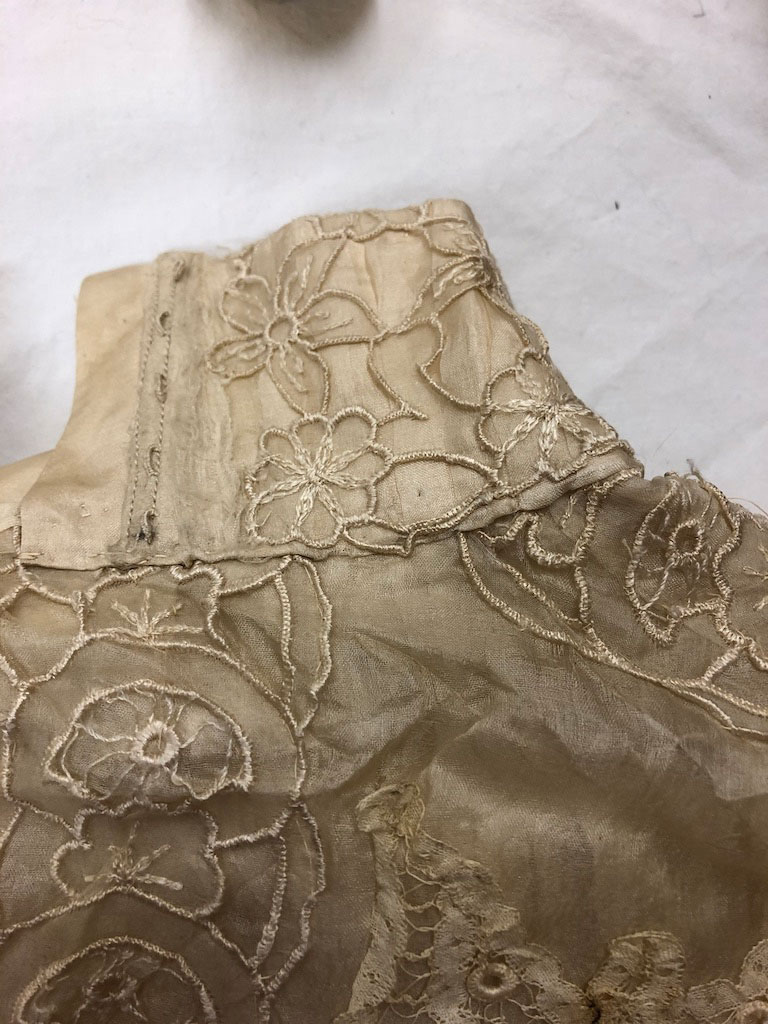
Detail of trim on collar.
According to the Weekly Herald article, Zaidee's dress was originally white but has now aged to a “candlelight” color. It features a high neck trimmed with duchesse lace and large butterfly motifs made of tape lace. (Butterflies were stylish in the early 1900s!)
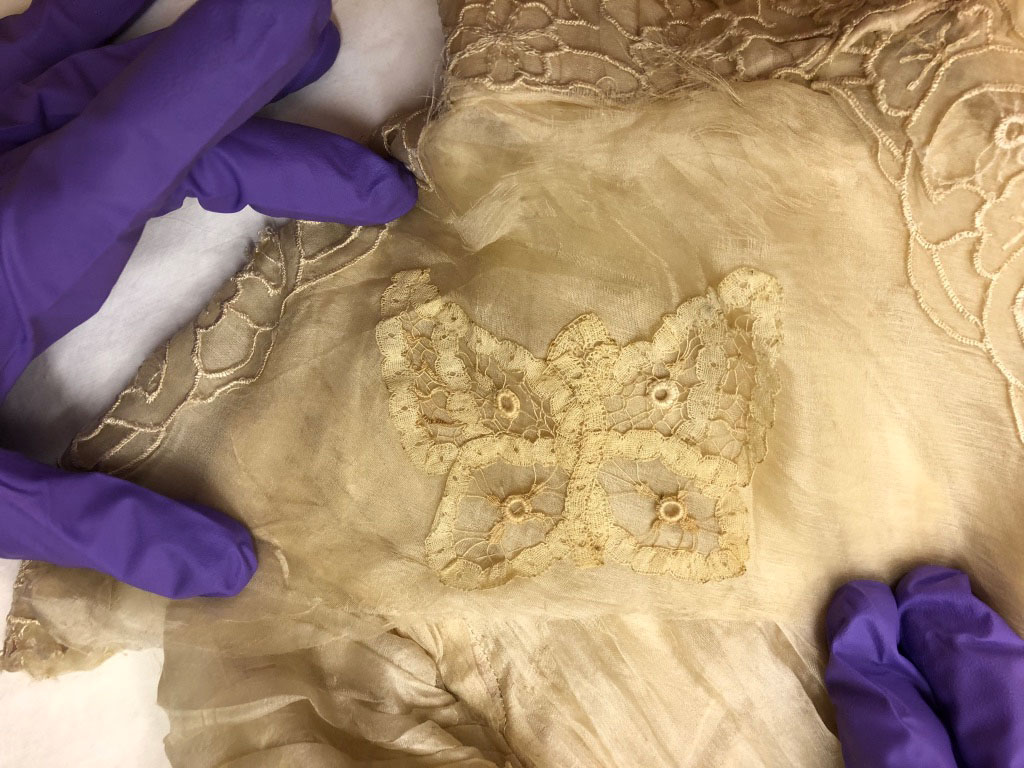
A frilly “capelet” adorns the shoulders and is trimmed with more butterflies. Sleeves are long, with several flounces ending in a ruffle at the cuff. The bodice is boned for support and separate from the long skirt.
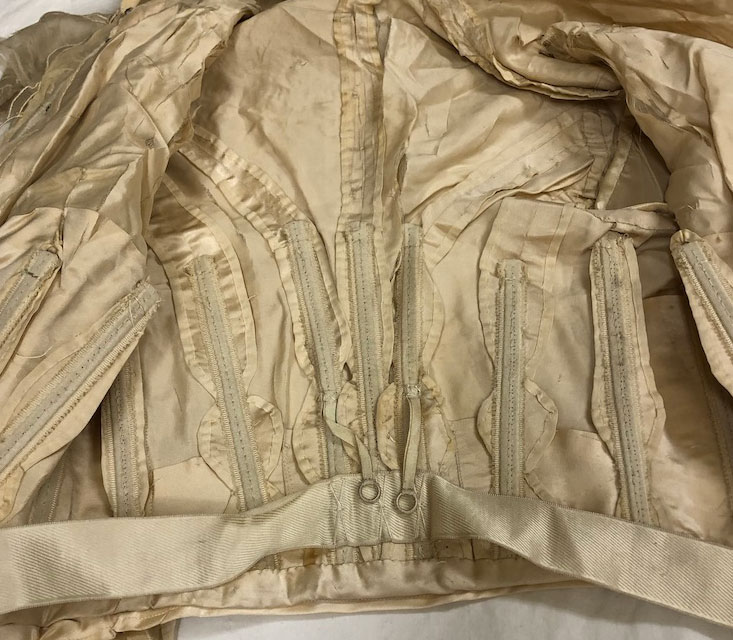
A pleated satin v-shaped belt is attached. The skirt is relatively straight yet full with a pleated voile overskirt and more duchesse lace trim.
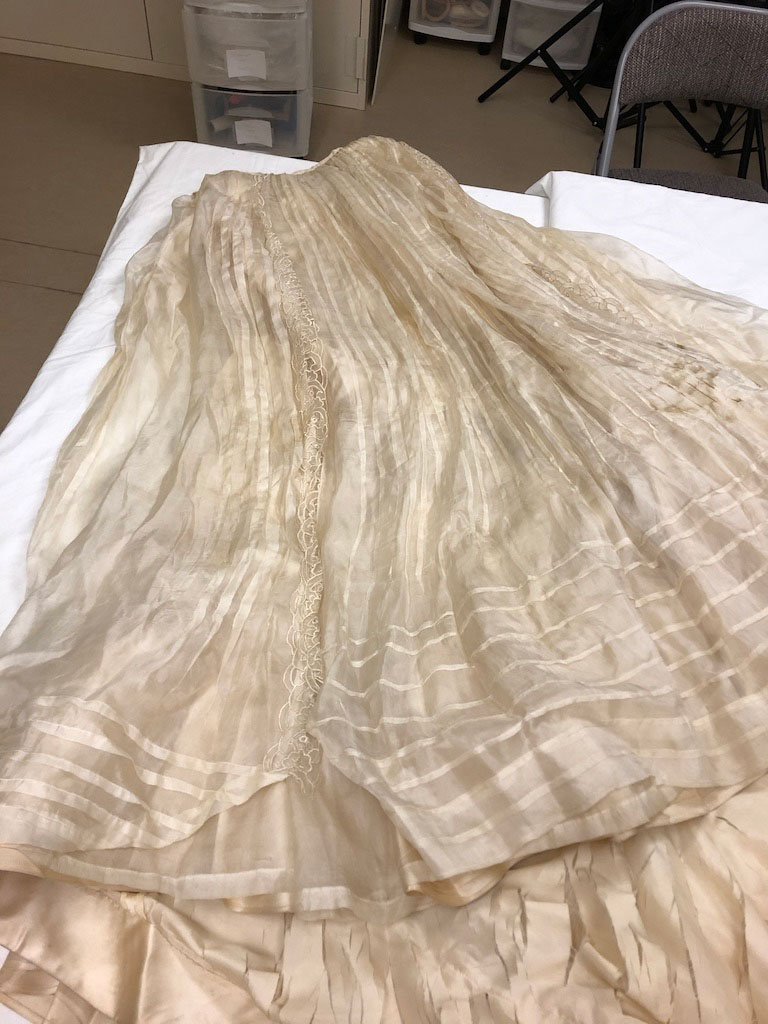
A small “dress improver” or pad is still attached to the back of the waistband. A cotton petticoat, trimmed with deep lace, also came with the dress.
Zaidee's dress is typical of a very stylish wedding gown of the early 1900s. To learn more about how wedding dresses have evolved, go to this link from Cosmopolitan.